

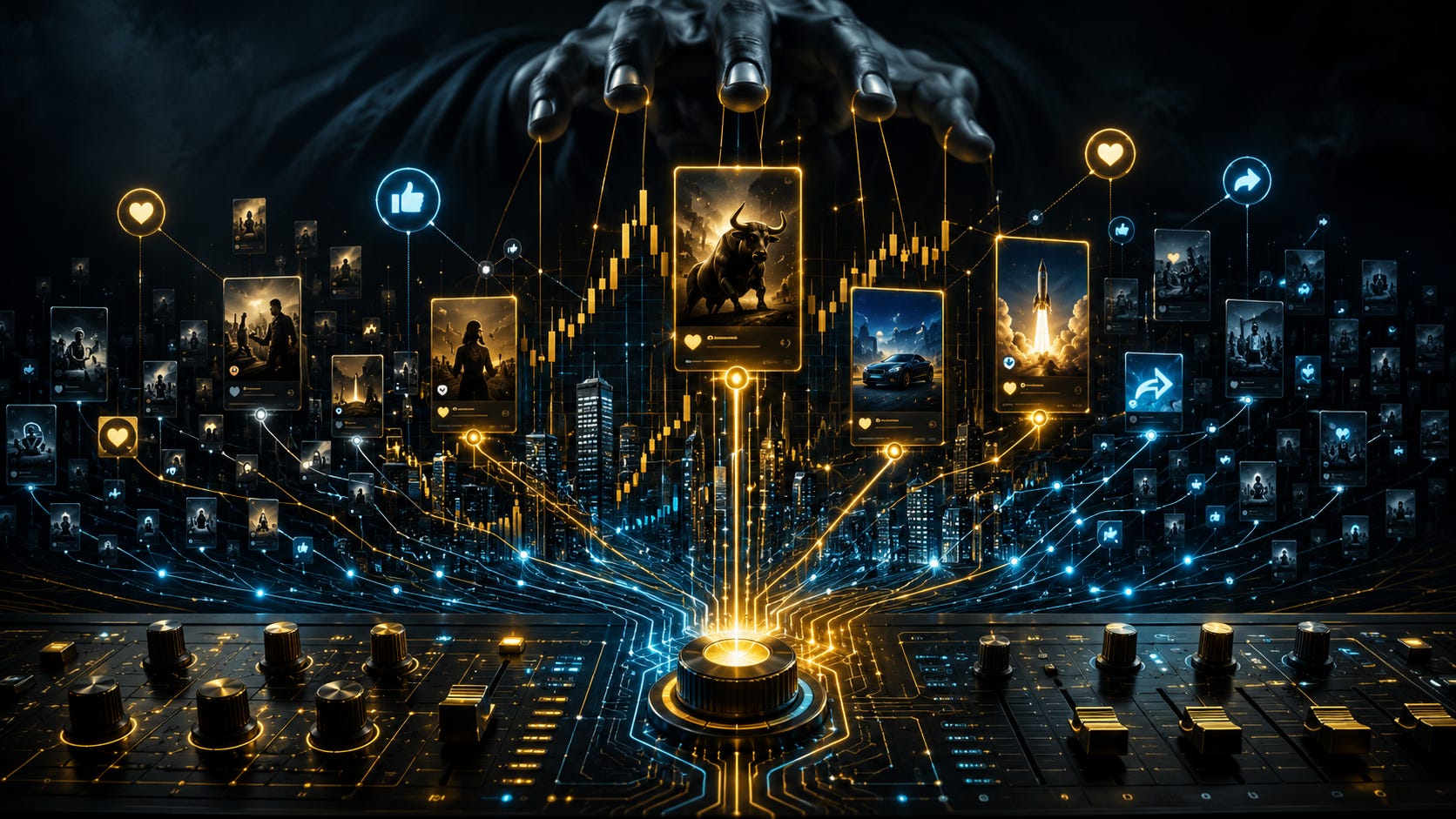
Authority will shift from humans to algorithms.
—Yuval Noah Harari
When you scroll through Twitter, your feed does not mirror reality back to you. Instead, it focuses your attention on what an algorithm curates and amplifies—and conceals what the algorithm has buried.
Modern finance, too, curates reality algorithmically—only it steers money and prices rather than attention and information. The S&P 500 itself—the very thing we call “The Market”—is one such algorithm.
Prices still appear to be the free-market verdict of millions of independent buyers and sellers. But beneath the surface, algorithms predetermine and curate the channels through which capital is permitted to flow.
A largely forgotten economist—Jacob Marschak—built the intellectual architecture that made all of this possible, an architecture that even now is being hardwired into frontier AI models such as ChatGPT and Claude.
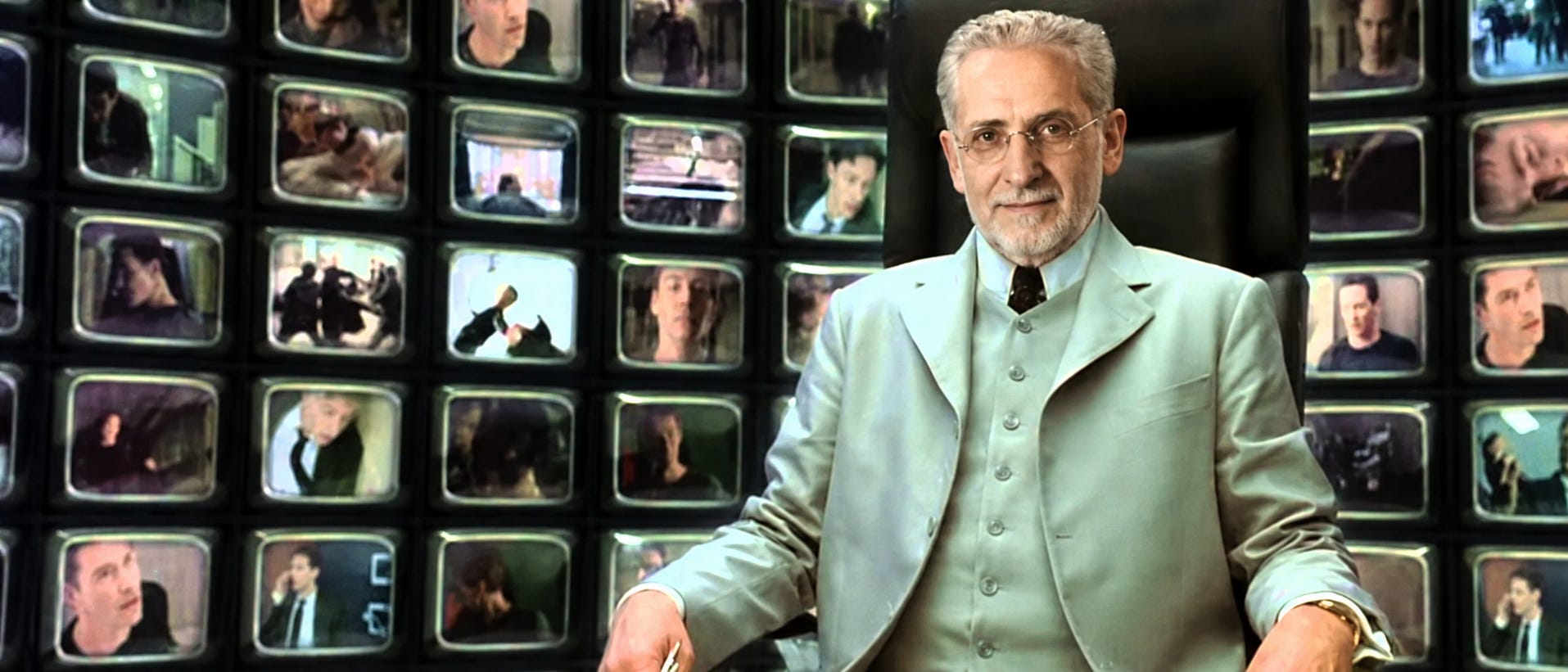
To fully decode the Financial Matrix and confront the Index Fund Question—whether or not passive investing is “worse than Marxism”—we must trace the code back to its source and examine the Architect’s monumental legacy across markets, finance, and economics. The institutions Marschak built, led, and shaped—and the wider networks of students, colleagues, and collaborators that formed around them—directly produced or incubated virtually the entire canon of modern finance and econometrics:
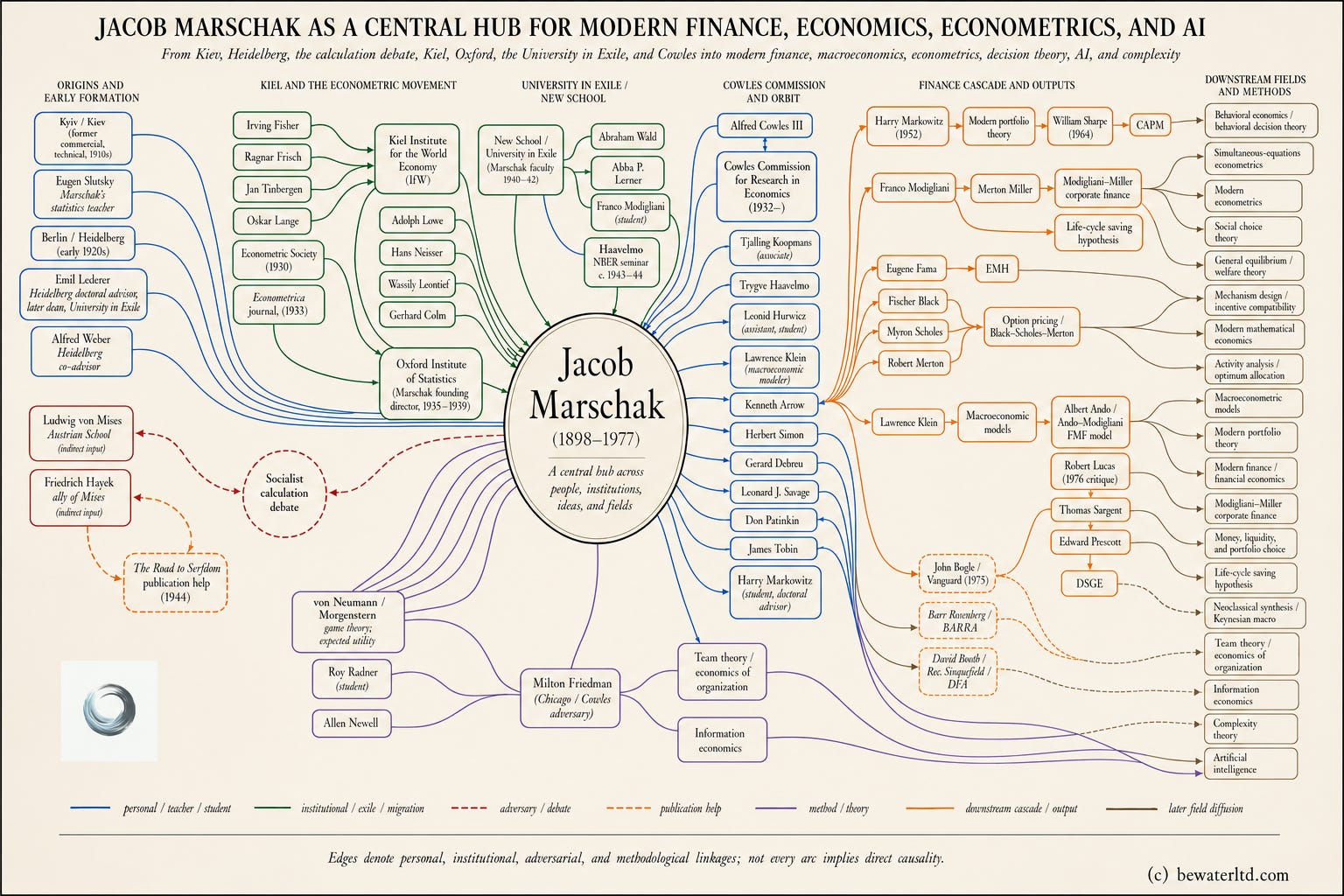
To separate Marschak’s technical legacy from the ideology animating it is impossible—for they were always the same project, as the full arc of this series will prove. Models and equations served as scientific-seeming camouflage for the Architect’s vision for society, translating his political aspirations into mathematical form.
Once laundered through equations, that vision could circulate under the veneer of objective technical knowledge rather than as contestable political commitments. Over time, as economists, financial institutions, and regulators absorbed the Architect’s vision and methodology—and embedded them into Nobel Prize-winning theory and market practice—his ideology was invisibly installed as the base layer of the Financial Matrix’s operating system. By rewiring markets from within, Marschak encoded the digital nervous system through which global capital—and increasingly AI—sees, prices, and governs the world.
Marschak’s Marxism
In his youth, Marschak pledged his political allegiance to Marxism by joining the Mensheviks. As we will show in later chapters, this was no mere youthful dalliance with Marxism. He did not renounce Marxism upon arrival in America; rather, he shed its name but not its nature, changed its uniform and its language—and wove its ideology so deeply into the fabric of the modern world that we no longer even recognize its origins. The lesson Marschak carried out of Russia and Nazi Germany was not that socialistic planning was impossible or ill-advised; it was that planning by overt seizure was primitive—Marschak needed to design a subtler, more sophisticated architecture capable of optimizing society without anyone noticing.
Marschak exploited a profound psychological truth: to most observers, a market is ‘free’ so long as the State hasn’t literally seized the factories, outlawed private property, or begun centrally planning the price of a loaf of bread. It appears to be capitalism if people conspicuously consume Hermès bags, corporations compete, entrepreneurs launch startups, and Elon Musk is able to IPO SpaceX.
The Architect realized socialists needn’t seize the means of production if their political objectives could instead be achieved by scientifically capturing the means of allocation; they need not visibly redistribute wealth and command capital when they could do so invisibly, using mathematical formulas so opaque that most people—even most mathematicians and economists—would fail to truly recognize what they were doing.
From Marxism To Truman Show Technocracy

Marschak left overt Marxism behind in Russia and Germany, but he did not abandon the fatal conceit that had animated his youth; in America’s capitalist economy and universities, he found a new host for his technocratic ideology. Here, the old socialist revolutionary traded its worker’s coat for a suit, and reemerged as mathematical economics in order to disguise the socialist-planning question as neutral economic “science.”
These formulas, theorems, and algorithms were not discovered as “natural laws of capitalism” nor were they ever intended to describe markets. They were invented specifically as a Trojan horse to reconstruct markets as administrative tools for socialist planners.
A model of markets, once embedded in algorithms, academia, regulation, and institutions, teaches capital how to flow. The map begins to rewrite the terrain. For Marschak, that was the entire point. His life’s work was not to map the market terrain, but to replace it. He desperately wanted society rendered mathematically tractable, because then and only then could he attempt to rationally “solve” society as an optimization problem.
The goal was never to model markets; it was to program them.
Even the socialists had discovered that markets were useful—not for the freedom and prosperity they promised, but as instruments of optimization and social engineering. Let consumers buy, let investors purchase index funds, let workers choose jobs, let prices allocate day-to-day production—but only within pre-approved channels. The commanding heights—interest rates, savings, investment, the structure of the economy and financial markets—should remain planned and under “rational” administrative control.
Programming Markets: Seizing The Means Of Allocation
The problem with all of this, of course, is that once human life is reimagined as a mathematical optimization problem to be ‘solved,’ your preferences as an individual become the system’s most persistent inefficiency to be engineered around.
Anyone who has used Google Search or a social media app has already experienced this type of algorithmic black box. The social media feed never simply defaults to showing us what we want; it edits and arranges information long before we encounter it while scrolling on our iPhones. The feed algorithmically decides what gets surfaced, what gets “shadow-banned” and buried, what gets amplified, and what is removed altogether from the menu of possible thought. This logic was infamously captured by the quote “freedom of speech doesn’t guarantee freedom of reach.”
Because the control does not appear to be overtly top-down, it still sometimes feels like reality unfolding naturally before us. And the interface is generous with the vocabulary of agency: it permits us to like, mute, and follow—allowing us to feel as if we are experiencing “choice,” “preference,” and “market feedback.” Subconsciously, we come to believe we are the authors of our feeds—that their information content reflects a thousand small choices we made freely, a digital self-portrait of our interests. We are not the authors of our feeds, however, but rather their subjects: social media is a Truman Show engineered for us by those who designed the algorithm. It is not a mirror of reality, but a mechanism for allocating it.
Prices—in both the financial markets and the real economy—have long been subject to the same treatment at the hands of the Architect and his intellectual descendants. Once prices are captured by their models and equations, they become a control surface—one that can reward, punish, subsidize, ration, channel, and discipline behavior without ever announcing itself as command.
The social media feed makes the mechanism of control intuitively obvious in a way the price system rarely does. Few among us have ever felt prices being curated by algorithms, but nearly everyone has seen “influencers” boosted on Instagram or Twitter—and has viscerally felt a feed curating their informational reality without their consent.
Index Funds As Social Media Influencers
The algorithms powering social media feeds are many, but one mechanism inside the recommendation stack has a direct analogue in capital markets. “Influencers” that already attract engagement are more likely to be boosted, which can generate still more engagement, followers, and distribution in a self-reinforcing loop.
The S&P 500’s market-cap-weighted algorithm operates on a similar principle, but directs capital rather than engagement: the larger a company’s market value, the greater its index weight—and the greater the share of each new dollar flowing into passive index funds that is automatically allocated to it. As Michael W. Green and others have shown, the result is a rich-get-richer curation system that converts prior market success into future allocation priority.
From The Invisible Hand To Invisible Fist
But index investing is merely one algorithm by which capital is now directed. As later chapters will show, nearly all such algorithms—and more importantly, the ideological methodology on which they are based—can be traced through Marschak.
The Architect didn’t use his scientific-seeming math to invent a thermometer that measures the temperature; instead, he invented a thermostat that sets the temperature. He seized the means of allocation—the price system itself—rather than the means of production. In doing so, he helped turn capitalism into a curated feed of HyperPrices masquerading as real prices, just as social media feeds display curated HyperReality.
Soviet-style central planning becomes unnecessary if the Financial Matrix determines which judgments are allowed to become prices, which are amplified, which are suppressed, and which are snuffed out before they can register at all. What the social media feed is now doing to our “information content,” the Financial Matrix had already been doing to prices in the economy and markets.
The point is not that passive investing, HFT, “quant factors,” CAPM, Sharpe ratios—or any of the Architect’s intellectual offspring—are literally Marxist. The danger is perhaps more insidious than overt central planning: all of these ideas were developed as part of a broader project to import the logic of socialist planning into the market itself—not by abolishing prices, private ownership, or competition, but by programming the mechanisms through which capital is measured, ranked, and allocated. They are all prominent expressions of the same sweeping ambition we explored in Value In The Age Of AI Technocracy—an ambition fundamentally hostile to Adam Smith’s “invisible hand” and the American conception of freedom.
Priests & Merchants
The Architect and his immediate intellectual descendants were ideologically driven Priests: theorists who embedded their ideology into mathematical models, benchmarks, and seemingly neutral rules. Investors, on the other hand, are Merchants: they need not understand or believe in the ideology; they only need to profit. Their creed is “these are the market conditions now,” and they adapt to whatever thermostat setting they’re handed rather than asking who set the temperature and why.
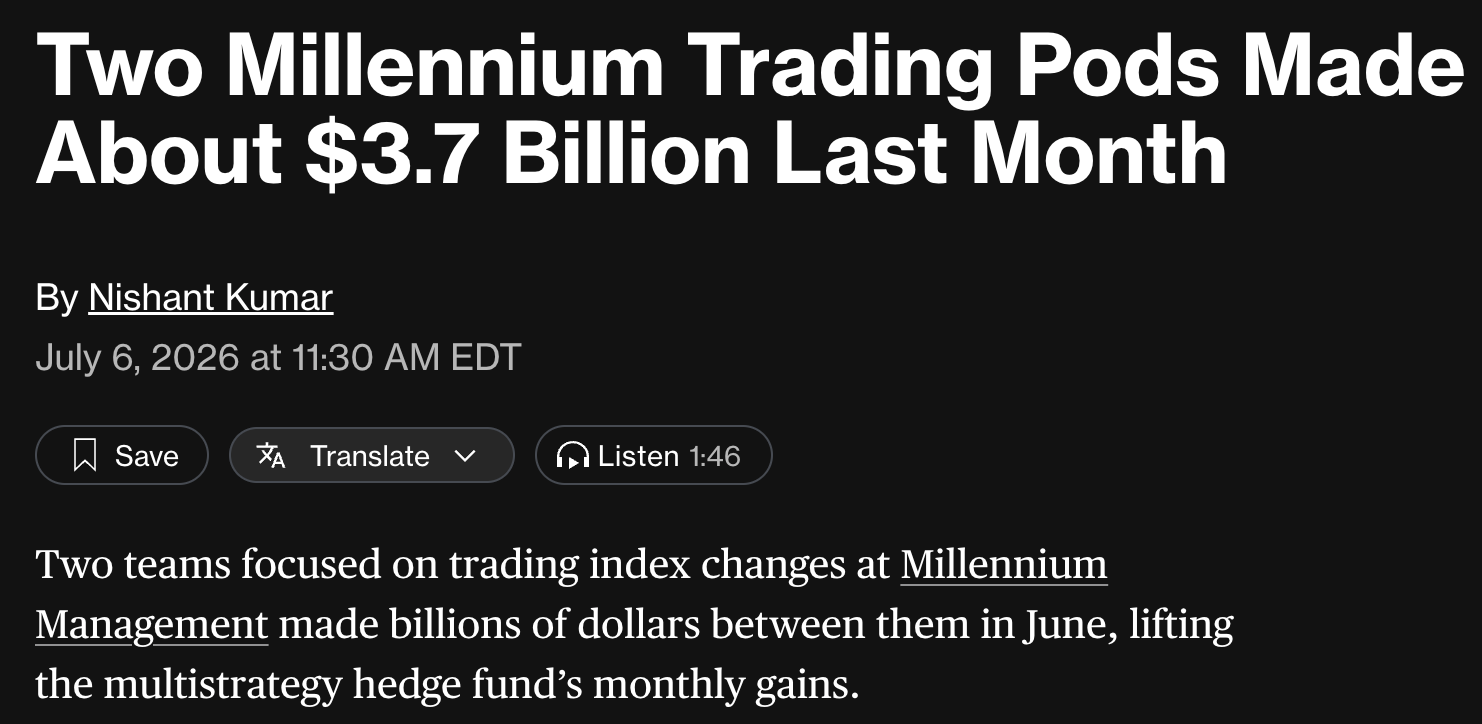
The Priests therefore only needed to win adoption by a “long march through the [financial] institutions”: once the S&P 500 became “the market,” for example, dissent became defined as tracking error. The Merchants then did the rest, reinforcing the Priests’ ideology. When trillions in passive flows mechanically bid up the largest index weights, for example, the rational investor does not protest the distortion—he anticipates it, front-runs it, and pockets billions:
Society Optimized To Run Like A Motherboard
All of this perhaps explains why modern ‘capitalism’ increasingly behaves like a social media feed—one in which the Forgotten Man is “shadow-banned.” This is hardly an accident: Marschak and colleagues laid much of the theoretical groundwork for not only the algorithmic systems that now govern the Financial Matrix, but also for social media and AI.
Marschak and company permitted the market to live—even Hermès bags and SpaceX—but only after stripping it of sovereignty. Technocratic planners determined the top-down architecture, markets were permitted to optimize locally within predetermined channels, and consumers and producers were “nudged” as necessary to meet the planners’ goals.
Only now, perhaps, does Slavin’s caustic quip about high-frequency trading fully land: New York City “optimised to run like a motherboard”—while human beings were left “just loitering.” Slavin had inadvertently revealed the terminal logic of the Architect’s dream.
Twitter/X: @bewaterltd | @Mojo Website: bewaterltd.com
Not investment advice. For educational/informational purposes only. See Disclaimer.
Your writing really feels like you’re pulling back the curtain on how things actually work. I see myself in your “Forgotten Man”, shadow banned, unable to participate meaningfully and left watching a system that still talks about freedom and choice while quietly narrowing both. This substack makes sense of things that often feel impossible to explain, but also pretty bleak. Is there a silver lining here? What, if anything, can the Forgotten Man still do?
Social media are personalized Truman Shows - that is a powerful thought!